Search This Blog

Friday, June 19, 2020

Organization Hacks for Teachers by Menachem Moscovitz

Teachers are creative but they also believe in smart work as well. No amount of storage is enough for teachers to keep their stuff, so here are some great teacher hacks to help you some time by Menachem Moscovitz. Check out the following tips:
 
Menachem Moscovitz

Hang it Up Session

You would be surprised how many organization dilemmas can be solved by simple and creative wall hangings.
  1. Use removable wallpaper painted with chalkboard or whiteboard paint to create writing spaces anywhere in your classroom. Menachem Moscovitz says that smooth surfaces work best- let us think about doors, windows, tables, etc.
  2. Take a wire wall hook and affix a clipboard for a good spot for lesson plans — or class list, sub plans or important papers — keeping things easily within the reach.
  3. Use glue to attach a thumbtack to a clothespin to hang up clean and used papers. Add some flair by covering the clothespin with a strip of tape.
  4. Designate a bulletin board (you can use sticky notes handy) to encourage students to write out questions and own discoveries about a subject matter. It is a very easy way to post questions about what you’re working on in one place.
  5. Make a "NO NAME" clipboard with hot-glued to a strip of wood. Display unsigned work by folding papers hotdog style for students to claim.
  6. Use painter's tape on your white board to make distinguishable areas for homework information or school announcements.
  7. Decorate with dust jackets from picture books hung banner-style or illustrations from old subject-related books. Make tape "frames" for hanging on the wall.
  8. Use a thrift store wine rack with plastic cups to store supplies such as markers, extra pens, and small scissors or glue sticks.
  9. Take a gallon Ziploc bag with a binder clip attached to one corner and hang on damage-free wire wall hangers for headphones storage.
Keep Students on the Task
 
Menachem Moscovitz

There are some tricks of the trade to make sure student supplies are in neat order — and that little hands do not leave your classroom a train wreck every day.
  1. Remember, a dish drainer filled with manila folders becomes a magical thing when there are review games, matching challenges and review work inside for those needing an extra challenge.
  2. Tape together a tissue box with another empty tissue box so students can instantly dispose of used tissues into the empty box.
  3. Buy a box of golf pencils for unprepared students at the tops. It decreases the likelihood of them walking off a class. In the first weeks of school, assign the task of taping the pencils to first finishers.
  4. Put dice in small clear Tupperware containers and shake as an alternative to having dice fly off the table.
  5. Take old DVD or video game cases, slip a white piece of paper in the pocket, and they can be used as mini-whiteboards for classroom games.
  6. Use a jar with every student name on a stick for a good way to quickly create groups. It is also an easy way to choose who will go first with presentations or randomly select students for helping in the classroom.

Wednesday, June 10, 2020

6 Must-Read for Every Teacher by Menachem Moscovitz

1. How to Talk So Kids Will Listen & Listen So Kids Will Talk by Adele Faber and Elaine Mazlish

Communicating with children may seem enough, but when a teacher has 30 new faces looking back at them, they would be glad they read this book. Menachem Moscovitz loves this book and recommends teachers to read it. While the book was originally designed for parents, it has become a teacher’s guide on how properly to instruct children in the classroom so they would listen better and pay attention to you more.

Menachem Moscovitz

2. 99 Ways to Get Kids to Love Writing: And 10 Easy Tips for Teaching Them Grammar by Mary Leonhardt

Writing is a significant skill, but few teachers teach it well enough so the child will want to continue doing it on their own. Menachem Moscovitz has read the book himself. In this book Mary Leonhardt explains how teachers can start encouraging writing for children as young as preschool age. For higher up grade levels, this book explains easy ways to make grammar fun rather than frustrating.

3. How to Teach a Love of Reading Without Getting Fired by Mary Leonhardt

Teachers who teach teenagers will quickly learn that you cannot make them do anything they do not want to do. This book provides teachers with dozens of suggestions to help increase reading and promote classroom discussion among old students. Best of all, it can all be done through fun classrooms less than punishments or extra homework.
 
Menachem Moscovitz

4. The Cooperative Classroom: Empowering Learning by Lynda A. Baloche

Menachem Moscovitz says that cooperation is the key in any job, but even more so when teaching a large group of students. While this book was originally designed for those teaching teenagers, it can easily be applied to every grade level. The book explains in detail why, how, and when cooperation should be used to improve the whole classroom experience.

5. Why Johnny Still Can’t Read by Rudolf Franz Flesch

While this book was not specifically designed for teachers, it includes all detailed exercises on phonics, reading, and sight words that has been helpful in many classrooms. Menachem Moscovitz believes that this book helps teachers help those who are having trouble reading, it is recommended for those teaching younger grades.
 
Menachem Moscovitz
6. Parents Who Love Reading, Kids Who Don’t: How It Happens and What You Can Do About It by Mary Leonhardt

Menachem Moscovitz says that this book was designed for parents but provides teachers with valuable insight into the mind of a child. The book explains that the reason most children do not like reading is because teachers put too much emphasis on it. By stepping back and taking a much relaxed approach to reading, teachers are able to get their entire classroom enjoying more books.

Thursday, June 4, 2020

9 Time-Saving Tricks for Teachers by Menachem Moscovitz

1. Grade students writing

Grading papers can be time-consuming tasks for teachers. To save yourself stress, consider not pointing out every single mistake on a student’s work. However, highlight the errors that directly align with the lesson. Create a cheat sheet with frequently-used comments from which you can easily copy and paste.
 
Menachem Moscovitz

2. Post instructions


Do you ever feel like you are repeating yourself to students? Menachem Moscovitz believes that every teacher feels like that every once in a while. With the use of shared workflow documents like Google Docs you can post instructions for lessons and tasks in one central location students check regularly. This method can be used for tests as well as assignments.

3. Use assignment numbers


Menachem Moscovitz uses this clever trick, he says that this organizing trick will help you grade and sort papers quickly. In alphabetical order, assign each student in your classroom a number; have them write it on the upper right corner of every paper they turn in. With the papers alphabetized you can grade and record scores in your grade book.
 
Menachem Moscovitz

4. Sticky note warnings

To deal with disruptive behavior without interrupting the class, place three large notes on the board. Every time a student acts out; quietly remove a sticky note instead of punishing the student. Once all the notes are gone, enforce a consequence, such as detention or a note home. You can easily reset this practice every day for the entire class or one to two individual students.

5. Use wall folders to check assignments

Hang folders each for one for each student in a central location you can see from your desk. Students use the folders to turn in their homework assignments when they enter the classroom. Menachem Moscovitz shares that this way you can easily see at a glance which students complete their work on time.
 
Menachem Moscovitz

6. Manage papers in an easy way

Here are a few tricks to help control the mess:
  • Schedule a block of time once a week on your calendar to declutter and file papers that are on your desk.
  • Utilize a word processing program to organize and store frequently used forms.
  • Designate a file drawer for each subject you teach to sort paper by topic, such as blue for tests and quizzes, etc.
7. Plan lessons online

Lesson planning sites can be powerful time-saving tools. Allow students and fellow teachers to view your plans online and adjust lessons with a single click of the mouse!

8. Get students on task


If your students take long to get settled in their seats after the bell rings, consider planning timed activities that students are expected to complete within the first 10 to 15 minutes of class. It could be a trivia contest or a question that introduces that day’s work.
 
Menachem Moscovitz

9. Use an email template

Menachem Moscovitz says that as a modern-day teacher, you are likely spending a lot of time sending emails to students and parents on different issues and subjects. Instead of typing out the same email every time, create a standard template for each common issue that you can cut, paste quickly.

Saturday, May 30, 2020

8 Tech Tools for Teachers on a Tight Budget

1. Flipgrid

Flipgrid is a fantastic tool for teachers to capture information about student learning and growth. Flipgrid is a free app where teachers can post a question or other cues for student response, and students can then reply with short videos of their liking. 
 
Menachem Moscovitz

2. InsertLearning

Menachem Moscovitz believes that the Insert Learning tool is a great free app. It can also be used with a Chrome browser extension that allows teachers to turn almost any web page into an interactive and live classroom lesson.

Teachers can highlight text; add questions, comments, test students, and videos inside the app with a Google Classroom code. This is a free version available for a limited number of lessons/chapters, as well as a relatively inexpensive paid option.

3. Google Docs

Google Docs is one of the most versatile digital tools for teachers. Its greatest strength is that it helps teachers to create a collaborative classroom. That is not only what it does. Menachem Moscovitz believes that the option for education add-ons, most of which is free of cost, is one of the tool’s strongest strengths. 
 
Menachem Moscovitz

4. Viewpure

Videos are a great educational tool. But using YouTube videos in the classroom is dicey because of inappropriate ads and suggested content that often pops up. Through videos students can learn and understand a topic in a fast and better manner. That is why lots of teachers advocate using ViewPure, a free toolbar widget that purifies YouTube videos. The tool removes the page clutter where questionable content could appear.

5. Prezi

Another tool which is good for teachers on a budget. Prezi is a web-based tool for creating creative digital presentations. Teachers have adopted this tool because of its visual presentation capabilities, which help engage students during lessons. The standard version is only $7 per month, with more expensive plus and premium versions available.
Menachem Moscovitz

6. Book Creator

Menachem Moscovitz personally likes the Book Creator app. With the help of this app, teachers and students can create, publish, and share digital books at a single go! Being a teacher it is hard to make time, this app here will help teachers manage time as well.

Teachers can create a shared library of books for their class students, and they can assign the creation of books as formative or summative assessments as well to test students’ knowledge. The most basic version of this tool is only $60 per year, or $5 per month.

7. Pear Deck Flashcard Factory

Thousands of teachers use this app to turn presentations into interactive and fun activities. The platform allows teachers to see student responses to questions immediately when posted. This free tool can make a lecture livelier which will keep students engaged. 
 
Menachem Moscovitz

8. Kahoot

Last but not least Kahoot is a game-based learning platform that helps make education more fun. The games are made up of multiple-choice questions, which can feature videos and images. Students can have healthy competition against each other and in groups when completing the games.


Saturday, May 23, 2020

Examples of Great Teaching During the Pandemic

How successfully have you and your school handled the lockdown situation? Menachem Moscovitz believes that even with online teaching you can teach a great deal of syllabus to the students. Moving on we have been observing what online teaching feels like during the pandemic and we bring you examples of some genius teacher from all over the world that are fantastically doing their job amidst all the chaos that is been going around

The first example is from Angus, Scotland. Angus is one of the 32 local government council areas of Scotland, a registration county, and a lieutenant fancy area. Jen Rankin runs the Creative Academy of Performing Arts Angus (CAPA).

She posted a video on the dance group’s Facebook page, with pupils singing lines each from the song Rainbows, by Kacey Musgraves. In her post, she says, “I wanted to do something really special with our students during this difficult time and pay tribute to everyone who is struggling through the hardship.”


Caption for the image: Two of the CAPA dance pupils singing their lines during the performance of Rainbow, by Kacey Musgraves.

“I have been working on this lovely project for a few weeks now and I hope that you all enjoy the sentiment behind the song. From me and my little darlings to you and yours. A big thank you to Garry Morrison for helping me with the video.” We need more teachers as Jen Rankin Menachem says. He was impressed by the kids' enthusiasm.

This second example is from Frisco, Texas. Teachers from an elementary school in Frisco, TX, cheered up some students by parading through their neighborhood, honking and waving from their cars during this struggling time.

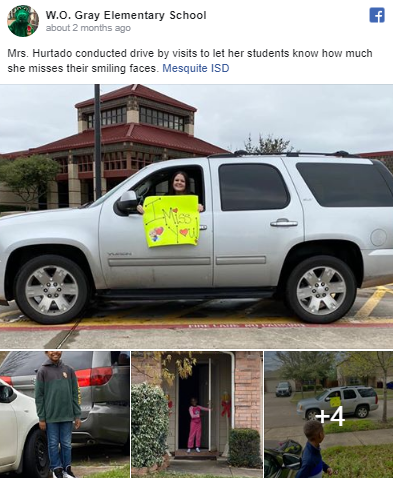
And an elementary school teacher in Mesquite, TX, drove to each of her students’ homes to check on them -- from a safe distance -- and remind them how much she misses them.


Everyone is suffering in their way, Menachem Moscovitz shares that all of us have to be strong and stand with each other at a time like this. Teachers can inspire students and their families with their passion for work and dedication. We should try to be there for each other.

Friday, May 15, 2020

Menachem Moscovitz: Explaining Google Classroom Tool

It is next to impossible to ignore Google’s most popular tools- Gmail, Google calendar, and Google Docs. All these tools have now become staples for getting organized and getting work done fast. Menachem Moscovitz believes that these tools have revolutionized the way we communicate, work together, and store information online.
 
Menachem Moscovitz
 
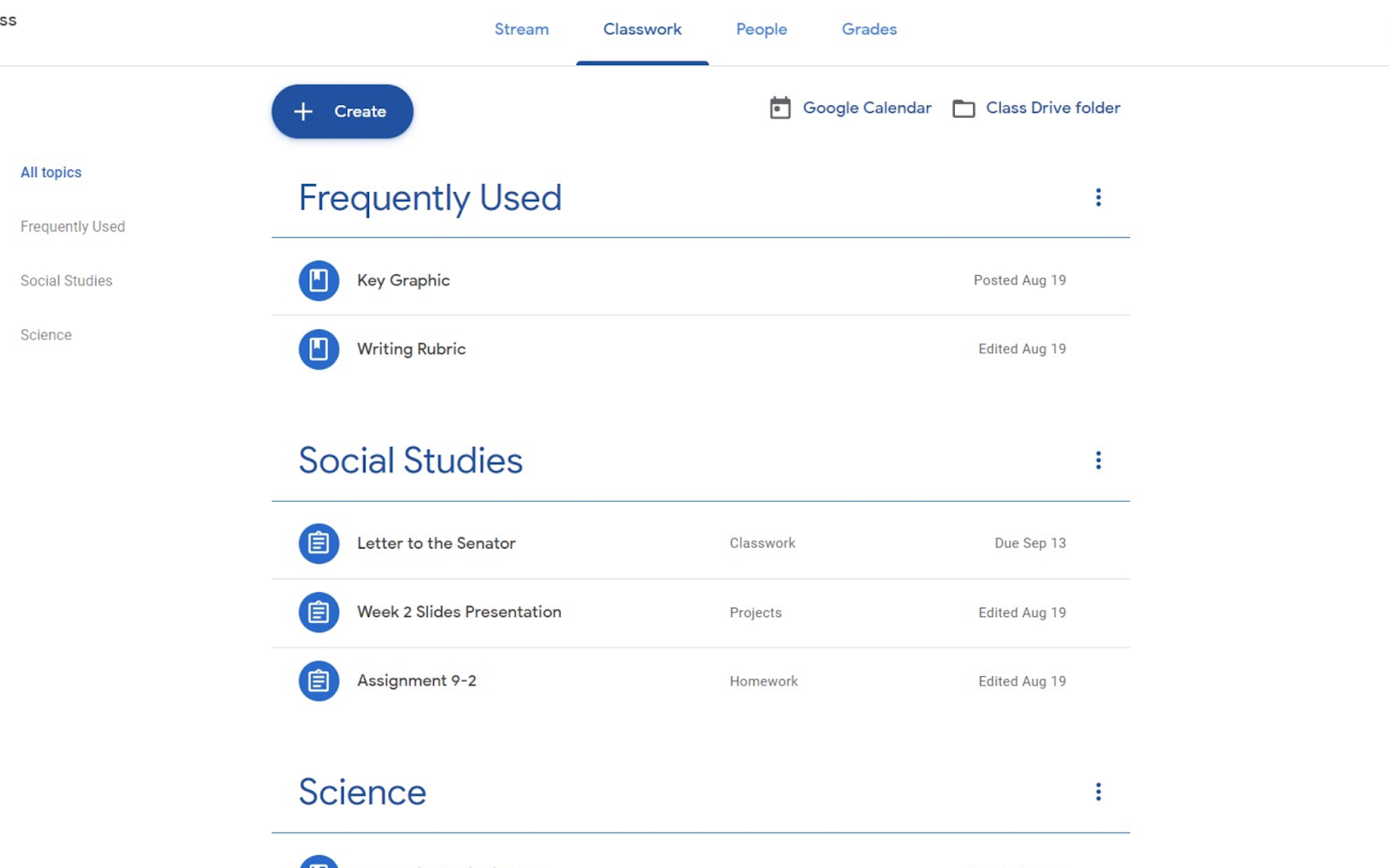
Especially during the ‘world’ lockdown, teachers and students can utilize the friendly platform Google Classroom- an education platform with the benefit of paperless sharing and digital collaboration to classrooms. Millions of teachers and students are currently using this amazing tool around the world to continue with their courses, making it the most loved edtech tools.

Menachem Moscovitz shares his concern regarding online teaching but believes that it can be handled with proper supervision. Today we are going to try to give an answer to the most commonly asked questions about this platform, on how you can use Google Classroom with your students.

What is Google Classroom?

Menachem Moscovitz shares that lots of teachers and students ask him this particular question often. Google describes Google Classroom as “mission control for your classroom,” and this might be the easiest way to explain this tool. 
 
Menachem Moscovitz

In simple words, it is a platform that ties together Google's G Suite tools for teachers and students. It acts as a digital organizer where teachers can keep class materials/notes and share them with students- all paperless!

You can pick and choose the features you want to incorporate. It provides you the flexibility to choose your favored tools, its seamless integration with Google's popular tools, is what makes Google Classroom one of the most widely-used edtech tools.

Is Google Classroom a Learning Management System (LMS)?

Technically no, Google Classroom is not a stand-alone LMS, Course management System, or student information system. That said, Google regularly keeps on adding a new function to Google Classroom. 
 
Menachem Moscovitz

In June 2019, for example, Google announced that schools will soon be able to sync new grading tools to an existing student information system. As Google continues to add features, it's likely that it may start to look, and function, more like an LMS. But for now, it is best described as a one-stop-shop for a class organization.

Who Can Use Google Classroom?


Anyone can use Google Classroom, it offers free service for anyone with a personal Google account, and it's also free for organizations using G Suite for Education or G Suite for nonprofits. In most cases, teachers and students can access Google Classroom using a Google account provided by their school as well or can use their personal account if needed. 
 
Menachem Moscovitz

How do teachers use Google Classroom?
  • Menachem Moscovitz shares that because it's a fairly flexible platform, educators use its features in different ways. With Google Classroom, teachers can:
  • Streamline how they can or do manage classes. The platform integrates with Google’s other tools like Docs, Drive, and Calendar, so there are lots of built-in "shortcuts" for classroom-management tasks.
  • Digitally organize, distribute, and collect assignments, course materials, and student work during lockdown period for smooth online teaching.
  • Teachers can also post an assignment online to multiple classes or modify and reuse assignments from year to year.
  • Teachers can easily communicate with students about their classwork.
  • You can use this platform to post announcements and reminders about assignments, and it's easy to see who has or hasn't completed their work.
  • We will discuss Google Classroom in our next blog as well, so make sure to check again!

Saturday, May 9, 2020

The Dos of Online Teaching- Tips by Menachem Moscovitz

Right now teachers are working hard to keep studies on during the coronavirus lockdown, how can teachers make the most of online teaching experience with your class? There are many teachers who are already learning – can they offer insights? Virtual school lessons are delivered in line with each person’s personalized curriculum.

Menachem Moscovitz

Menachem Moscovitz has years of experience in teaching and shares his expert tips on online learning. Teachers can take help from the below-shared tips to know how they can make teaching sufficient during the lockdown.

Dos of Online Teaching

  • Collect email addresses and contact numbers of all the students’ parents and create a group to discuss online classes.
  • Prepare yourself before going live aka doing the online class. It is best to rehearse offline before your actual class.
  • Check all the necessary equipment and services, like your internet connection, laptop, and its battery, is camera working, etc. before your session.
  • Be ready with the assignments that you want to share after your online class session, such as a list of questions related to the specific topic.
  • You may also ask one or two students to be volunteers and help you out in passing important information about the online session to other students in the group or of class if required. It will reduce your workload; you would not have to inform each and every student. This may be beneficial in conveying last-minute changes if any you want.
  • Give your students every instruction required so that your online class runs smoothly and is fruitful.
  • During online sessions during a lockdown, give proper breaks so that the students will have the time to think about the topic and not feel bound and frame their questions as doubts.
  • It is better to keep your class short or as a series of short sessions; this depends on various factors, like the topic, student’s participation, and the teaching plan.
  • You may ask a few open-ended questions related to the said topic during the online session to make students more responsive.
  • Encourage students not only to ask their queries or doubts related to the topic but also to answer questions asked by their peers. You may set up an online discussion forum for this to work out.
  • Post assignments just after your online session and announce the details in your session.
  • Do not forget to take feedback from the students. It will really help you learn their point of view about the session.
Menachem Moscovitz
Conclusion: During your online class/session, you may request students to wash their hands properly at regular intervals to spread awareness. Students should know that it is important for them to attend these classes in order to stay ahead and keep up with their syllabus. As a teacher, you can make them understand this by motivating them from time to time.